Webinar
Events
Calendar of Events
|
Monday
|
Tuesday
|
Wednesday
|
Thursday
|
Friday
|
Saturday
|
Sunday
|
|---|---|---|---|---|---|---|
|
0 events,
|
0 events,
|
1 event,
-
Flood frequency analysis (FFA) forms the foundation of flood estimation, infrastructure design and floodplain management. In practice its aim is to provide estimates of frequency for large floods whose magnitudes are likely to be outside the observed range. Are the statistical models underpinning current Australian practice suitable for this task? This webinar explores emerging research… |
0 events,
|
0 events,
|
0 events,
|
0 events,
|
|
0 events,
|
0 events,
|
0 events,
|
0 events,
|
0 events,
|
0 events,
|
0 events,
|
|
0 events,
|
1 event,
-
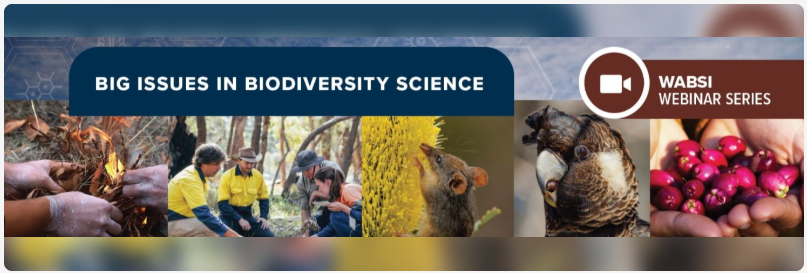
This event from WABSI features Professor Jonathan Tonkin explaining how increasingly frequent floods, droughts and heatwaves (especially when they combine) affect river biodiversity, and why managing rivers well will mean moving from local, reactive responses to coordinated, catchment-scale approaches backed by long-term monitoring. EVENT INFORMATION + REGISTRATION HERE |
1 event,
Session #10 of the 2026 ‘Stormwater Fundamentals’ series, and will focus on key steps in the design of high flow bioretention systems (e.g. Filterra bioretention). EVENT INFORMATION + REGISTRATION HERE |
3 events,
-

Digital technologies are now central to everyday life and a key driver of economic productivity, and demand for data centres is growing rapidly. For planners, the challenge is balancing the economic and technological benefits of data centres with positive outcomes for communities and broader sustainability goals. This PlanTech Briefing dives into the nitty-gritty of planning…
-
You are warmly invited to join the second session in AWP's three-part webinar series on the nexus between GEDSI (Gender Equality, Disability, and Social Inclusion) and climate resilience in water resources management. AWP has reviewed its programs to identify good practice GEDSI and climate resilience case studies, and this series shares the tools, resources and…
-
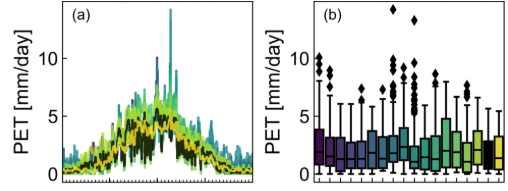
Potential evaporation (PET) is a core input to hydrological modelling, yet it is rarely measured directly. Practitioners instead rely on meteorological data such as temperature, radiation, wind and humidity to estimate PET using empirical and physically based methods. Understanding these approaches is essential for reliable water resource assessments. In this hands‑on course, participants learn how… |
1 event,
-
EVENT INFORMATION + REGISTRATION HERE |
0 events,
|
0 events,
|
|
0 events,
|
3 events,
-
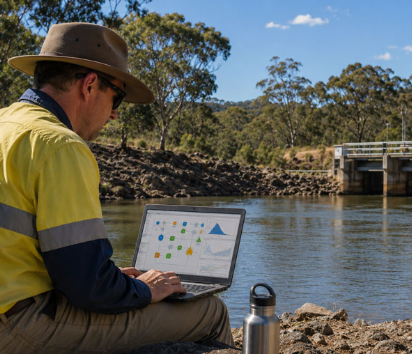
GoldSim is transforming how engineers, scientists, and planners model complex systems, offering a powerful, visual way to simulate uncertainty and change over time. This highly practical course introduces participants to probabilistic, dynamic simulation using GoldSim and its expanding role in water resources, environmental management, and risk-based decision making. Through hands-on examples, participants will see how…
-

Does your council operate with any of these common patterns? 1. Multiple control systems across multiple asset types Each asset type on its own brand, software and login. 2. No means of restoring a controller quickly when one fails No recovery point — no record of the operational settings as they were. 3. Hardware carrying…
-
Join the PIA WA Urban Data Network for an online Lunch & Learn session as an introduction to QGIS, a powerful tool for accessing and viewing spatial data from key Western Australian government agencies. The Urban Data Network aims to bring together planning practitioners interested in data, GIS and planning technology. This session introduces participants… |
0 events,
|
1 event,
-

EVENT INFORMATION + REGISTRATION HERE |
0 events,
|
0 events,
|
0 events,
|
|
0 events,
|
0 events,
|
1 event,
-
Please join us for the final Urban Data Network Meetup for 2026 where we will be addressing the biggest trend in PlanTech: Artificial Intelligence. Like no other technology that has come before, AI touches on all aspects of planning practice, whether automating document checking and administration, undertaking research or providing advice. PIA’s Position Statement on… |
1 event,
-
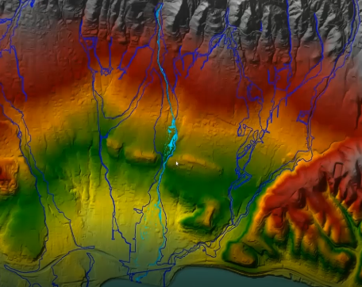
2D mobile‑bed sediment transport modelling is becoming essential for understanding how rivers, reservoirs, and watersheds evolve through time. This advanced masterclass gives participants practical, hands‑on experience applying HEC‑RAS’s latest sediment, mudflow, and debris-flow capabilities to real‑world geomorphic and engineering challenges. Participants progress from a calibrated 2D hydraulic model to a complete sediment transport simulation, learning… |
0 events,
|
0 events,
|
0 events,
|