
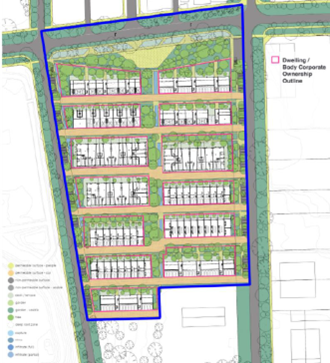
The CRCWSC's Infill Performance Evaluation Framework assesses water performance and architectural quality, showcasing benefits of water sensitive design through the Knutsford case study.
Scale: Precinct
Development Type: Residential development, Strata/Multi-dwelling
Local Government: City of Fremantle
WSUD Solution: Greywater reuse, Pervious paving, Rainwater storage
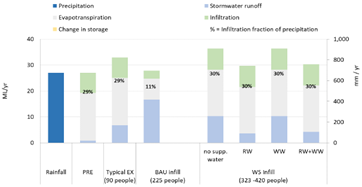
The Cooperative Research Centre for Water Sensitive Cities (CRCWSC) has developed an Infill Performance Evaluation Framework to assess the water performance and architectural quality of infill developments. This framework quantifies the impact of water sensitive practices on hydrology, stormwater management, water storage, and demand and supply efficiency. By comparing scenarios like business-as-usual with water sensitive development, the framework highlights the benefits of incorporating permeable surfaces, rainwater harvesting, and alternative water sources.
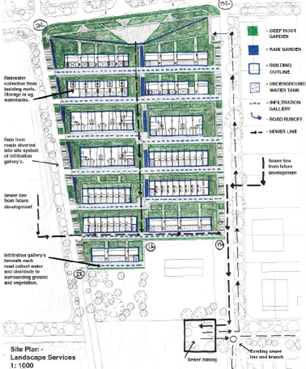
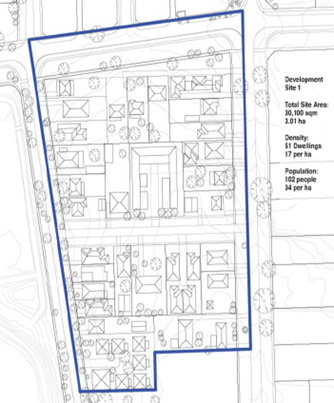
The case study of Knutsford, a proposed medium-density development near Fremantle, demonstrates how water sensitive design principles can improve water security, liveability, and urban heat management. Through enhanced access to open spaces, deep root zones for vegetation, and supplementary water supplies, water sensitive infill designs mimic natural hydrological processes, reduce reliance on mains water, and mitigate urban heat. The framework emphasizes the importance of purposeful built form design, retention devices, and rainwater harvesting to optimize performance. Ultimately, water sensitive infill designs aim to maintain or improve water quality, support biodiversity, and enhance the overall amenity and functionality of urban spaces.
Our focus areas
Supporting community wellbeing and healthy environments within resilient and sustainable places throughout Western Australia.