
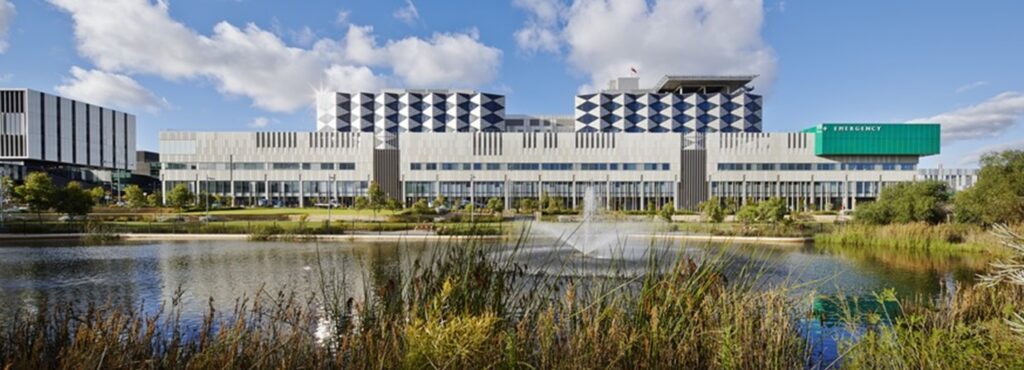
The Fiona Stanley Hospital incorporates water-sensitive urban design principles, managing stormwater on-site through infiltration, reuse, and evapotranspiration, while preserving habitat and reducing water demand.
Scale: Precinct
Development Type: Commercial development
Local Government: City of Melville
WSUD Solution: Green roof/walls, Greywater reuse, Infiltration basins and trenches, Stormwater harvesting and reuse, Swales/Buffer strips, Waterwise landscaping
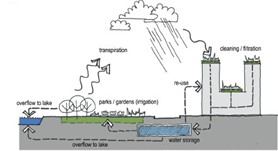
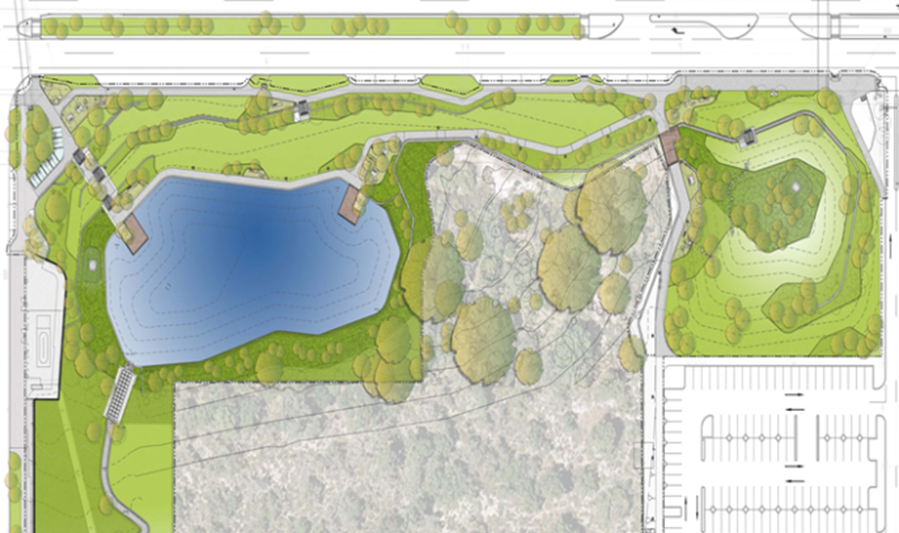
The Fiona Stanley Hospital showcases water sensitive urban design principles across its 32-hectare site, incorporating roof gardens, public spaces, and bushland. Stormwater is managed on-site through infiltration, reuse, and evapotranspiration, with features like pollution control traps and underground tanks. The design leverages existing hydrology and topography, allowing for natural infiltration and groundwater recharge.
Water-efficient fixtures, rainwater, and wastewater from a Reverse Osmosis plant are utilized for toilet flushing, reducing scheme water demand. The irrigation system is designed for efficiency, with separate pumps for hospital and municipal water, and the ability to switch off once plants are established.
Challenges included managing stormwater onsite due to lack of drainage connections and addressing impervious areas. Despite this, the system successfully manages both small and major flood events. The integrated approach not only fulfils the hospital’s objectives but also enhances the connection between people and nature. Continuous monitoring ensures water quality standards are met, while recycling efforts save significant water annually.
Overall, the project demonstrates careful planning to preserve natural systems, protect habitat, and mitigate urban heat island effects.
Our focus areas
Supporting community wellbeing and healthy environments within resilient and sustainable places throughout Western Australia.