
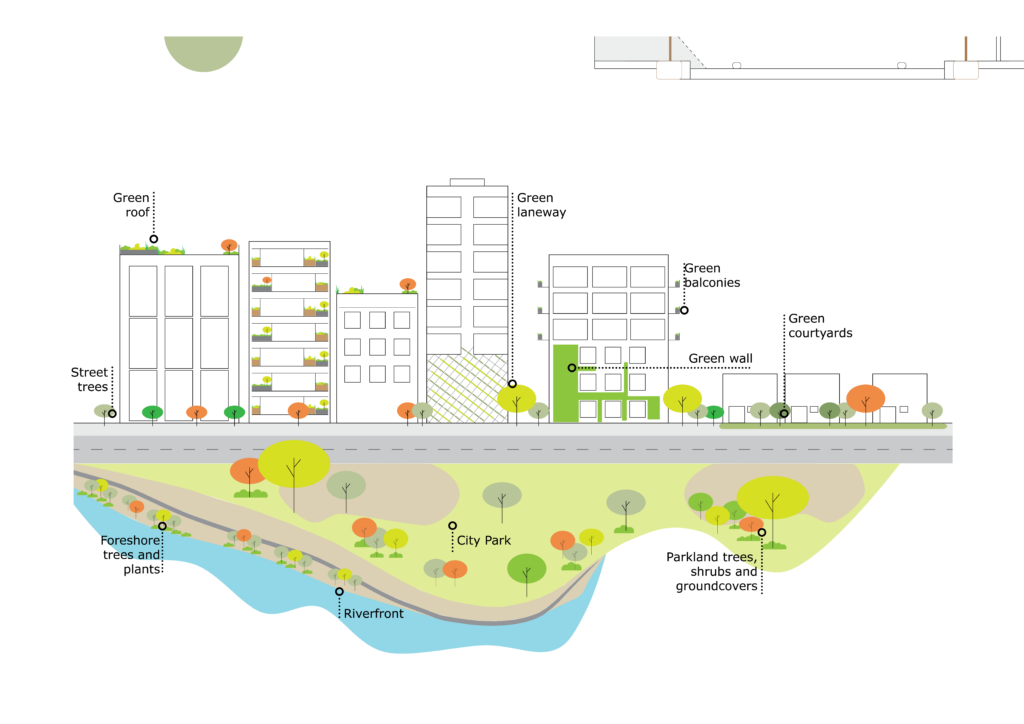
Urban greening typically involves incorporating vegetation into urban environments to enhance biodiversity, improve air quality, and promote well-being. This fact sheet highlights the benefits of incorporating greenery into urban areas.
Design Scale: District, Lot, Precinct, Street
Urban greening refers to the practice of integrating greenery (native and non-native vegetation) into urban environments. This includes retaining and planting trees, shrubs, climbers and groundcovers in parks, streetscapes, gardens, podia and platforms, roofs, walls and balconies. Integrating these ”green” systems with “blue” systems (stormwater and wastewater management, wetlands, waterways and drains) provides opportunities for passive watering and fit-for purpose water use and enhances plant health.
The benefits of urban greening are manifold. It helps mitigate the urban heat island effect by providing shade and reducing surface temperatures. Green spaces also absorb pollutants, improve air quality, and support biodiversity by providing habitats for various species. Additionally, urban greening enhances the mental and physical well-being of city residents by creating spaces for relaxation, recreation, and social interaction.
Our focus areas
Supporting community wellbeing and healthy environments within resilient and sustainable places throughout Western Australia.