Why should we apply a WSUD approach?
WSUD is a great tool to address the implications of climate change, particularly:
- hotter temperatures, which will result in significant community and environmental health impacts, increased energy required for cooling and a greater need for water by plants due to increased evapotranspiration
- less water in the landscape and lower groundwater recharge, reducing water available for irrigation and other uses as well as to sustain the environment
- more frequent high intensity storms and the potential for flash flooding and damage to infrastructure
- increased bushfire risks
Applying a WSUD approach also supports Western Australia's journey towards water security, by ensuring the total water cycle and all sources of water are considered in water supply planning decisions.
Water underpins delivery of the United Nations Sustainable Development Goals, with greatest alignment with:
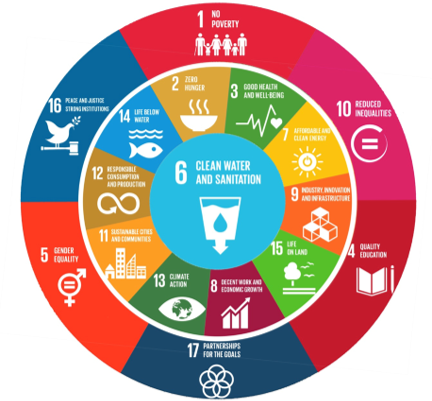
Goal 6. Clean Water and Sanitation
Goal 9. Industry, Innovation and Infrastructure
Goal 11. Sustainable Cities and Communities
Goal 12. Responsible Production and Consumption
Goal 14. Life Below Water
Goal 13. Climate Action
Goal 15. Life on Land
Goal 1. No Poverty
Western Australia has significant policy support for WSUD. The primary policy is State Planning Policy 2.9: Planning for Water (draft WAPC, 2021). This policy is supported by the Planning for Water Guidelines, and is considered able to be used for decision-making purposes by the Western Australian Planning Commission.
The objectives of the policy are to:
- Protect and improve the environmental and the social, cultural and economic values of the state’s water resources.
- Protect public health and the long-term supply of good quality and affordable drinking water.
- Manage the risk of flooding to people, property and infrastructure.
- Ensure the secure and sustainable supply, use, disposal and re-use of water resources.
- Ensure future development is resilient to the water-related impacts of climate change.
- Minimise future costs and protect public health by ensuring that appropriate wastewater infrastructure is provided.
The policy requires planning proposals to be accompanied by sufficient information in accordance with the Guidelines, which specify instances where a Water Management Report is required and what it must contain. This includes requirements for:
- protection of water resources and other important environments
- stormwater and groundwater management
- water efficiency and fit-for-purpose use
- achieving liveability outcomes
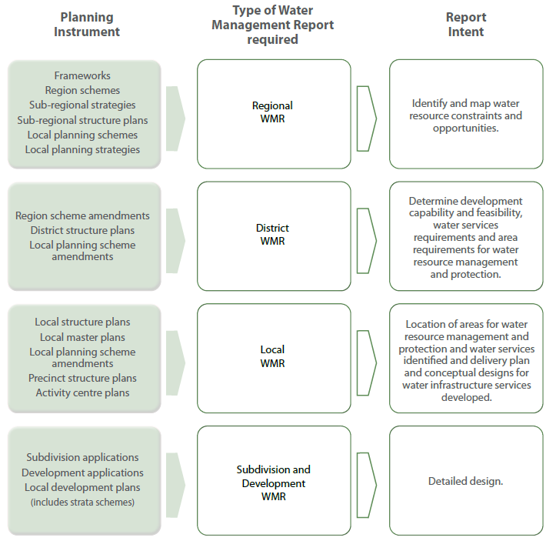
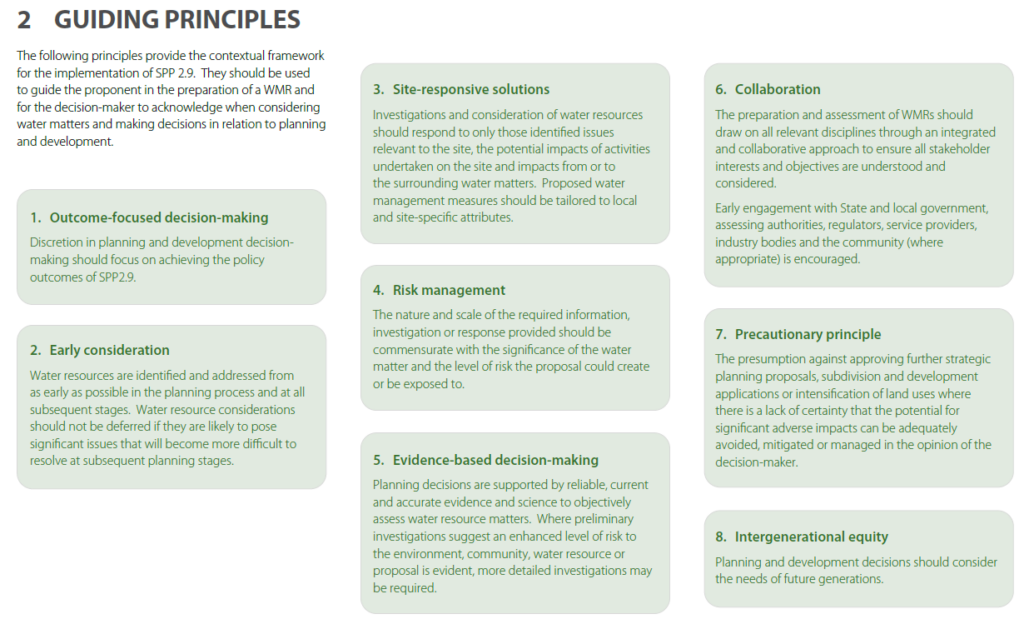
The Guidelines contain guiding principles that should be used when developing WSUD solutions. They will also guide decision making on proposals.
Additional support is provided by State Planning Policy 7: Design of the Built Environment and the Design WA policy suite. WSUD is fundamental to achievement of a number of the design principles and each policy notes the importance of integrated water cycle management and liveability.