How do we deliver WSUD outcomes?
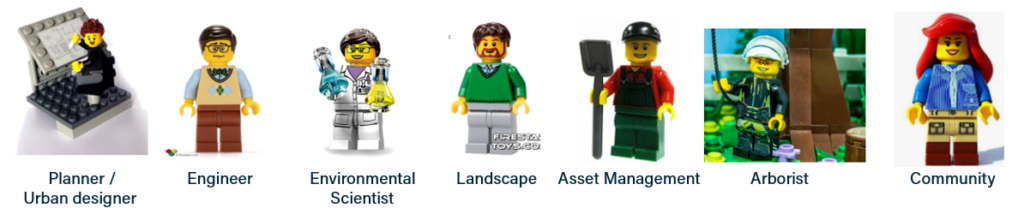
Diverse knowledge is required to deliver good WSUD outcomes. It is recommended that you:
- Establish a muti-disciplinary team
- Get involved early in the process and consider different perspectives and objectives
- Work with everyone – collaboration is the only way to deliver
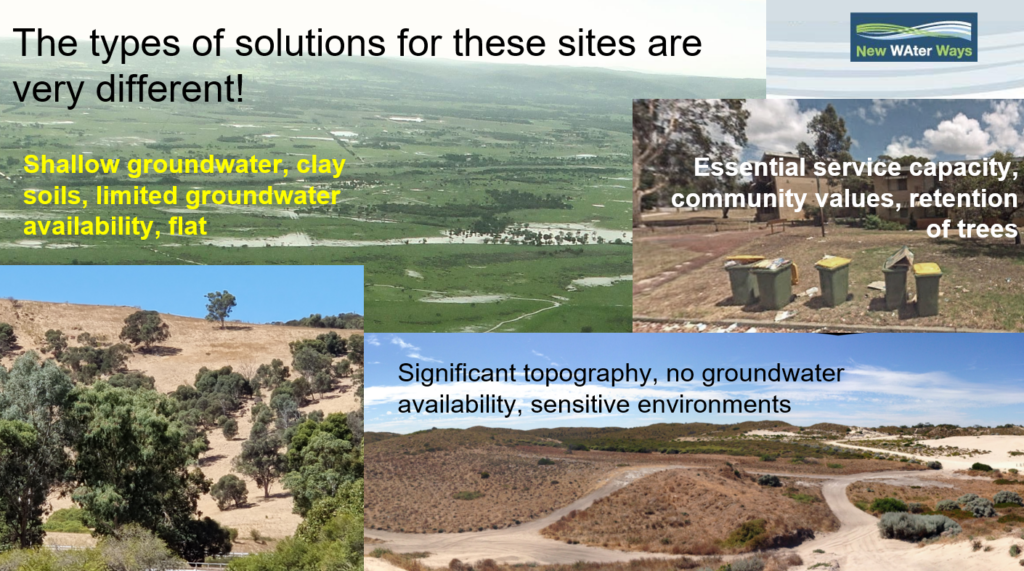
It is also critical to respond to site and development context. This includes consideration of:
- current and future climate
- landform
- soil type
- hydrological conditions
- important environments
- water sources and servicing, and
- urban and built form.
Each aspect above influences the design of the water management solution. For example, rainfall patterns, soil type, landform and other environmental conditions combine to influence the hydrological response (where the water goes, how it gets there). This, in turn, will influence the proposed water sources and servicing, and urban and built form. The key is to identify which conditions have the greatest impact on, or should be considered by, the water management solution.
WSUD requires a different way of thinking about the management of rainfall events.
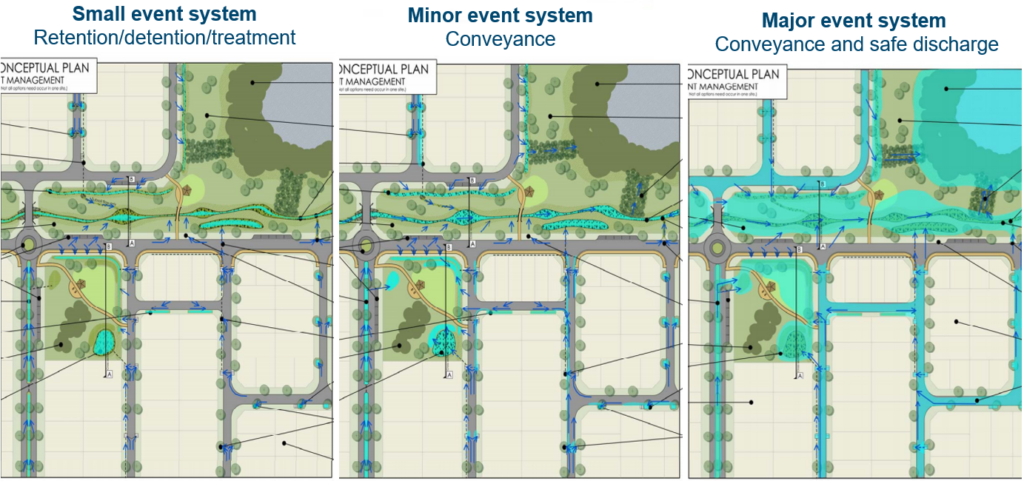
Rainfall events are generally classified as small, minor and major. In Western Australia, the Decision process for stormwater management in WA (DWER, 2017) defines small or frequent events as the first 15mm of rainfall.
Minor events are rainfall events greater than small rainfall events and less than major rainfall events.
Major events include events greater than the minor rainfall event and up to and including the 1 per cent annual exceedance probability event (often called the flood event).
These types of rainfall events act quite differently in the landscape and accordingly, stormwater systems should be designed to achieve the different management objectives of each type of event.
For example, high frequency rainfall events (small events), which encompass around 95% of the volume of rain that falls, tend to be the more gentler rainfall events which are often contained within an urban catchment but can pick up contaminants from the surfaces they move across.
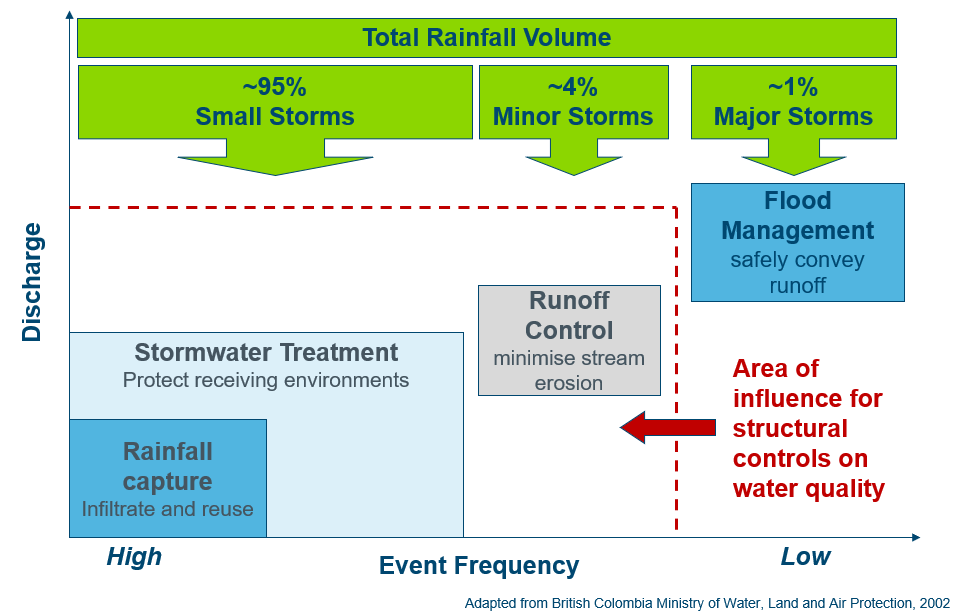
Runoff from these events may require some form of treatment prior to discharge into the receiving environment. This is usually an area of vegetation, where the water can soak into the ground and be treated by the vegetation and soils.
Minor storm events tend to generate runoff from urban landscapes. Water sensitive stormwater solutions for these events should seek to minimise erosion, manage sediment transport and provide serviceability, amenity and road safety.
Flood events are rare - there is a one percent chance in any year that a flood event will occur. This is also known as a 1% annual exceedance probability (AEP) event. While sufficient areas for flood control are critical, these areas can be designed for multiple purposes, provided they are also able to safely store and convey the flood event should it occur.
A representation of how the different events should be managed in different parts of the urban form is provided below (DWER, 2017).
The way we manage water can influence all elements of planning and urban design, from land use change to design of the urban form (lot layout, public realm, movement network, infrastructure and servicing) and the built form (building type, private and communal open space, materials and landscaping).
It is important to use a risk-management approach when assessing and managing water resources and the delivery of water sensitive communities. This includes the consideration of risks to the environment from the development, and risks to the development from the environment. The identification of these risks should guide the main areas of focus and effort.
It is also important to commit to the delivery of good outcomes - not just meet design criteria. Most criteria are just guidelines. WSUD and water management requirements are tools to help achieve better outcomes for the community such as green, liveable places, safe and health communities, and healthy environments.
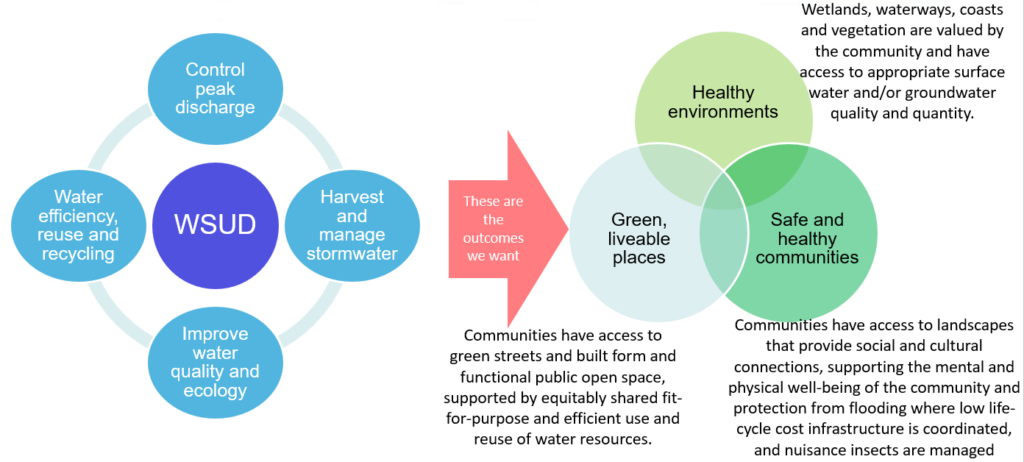
There are a number of technical guidelines that support delivery of WSUD outcomes in WA. These include:
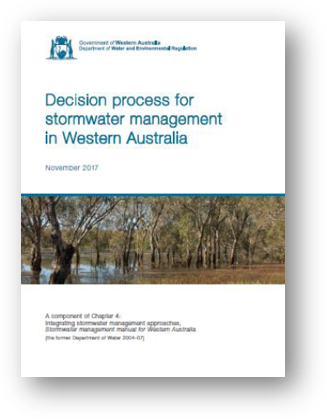
The Decision process for stormwater management in Western Australia (DWER, 2017) provides an approach and outcome criteria for planning and designing stormwater management systems for urban developments and retrofitting existing stormwater management systems.
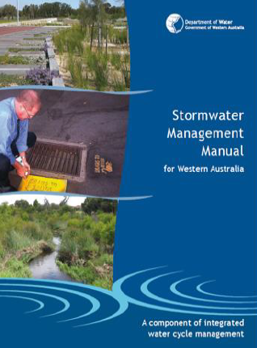
The Stormwater Management Manual for Western Australia (DWER, 2004-2007 updated 2022) outlines principles, objectives, and detailed design information on stormwater management for WA, supporting the implementation of WAPC’s and Environmental Protection Authority policies, while providing specific guidance aligned with national standards.
Australian Runoff Quality – A Guide to Water Sensitive Urban Design (Engineers Australia, 2006) is a national guideline that outlines procedures for estimating urban stormwater contaminants, managing stormwater quality and quantity, evaluating these practices' performance, and developing integrated urban water cycle management strategies.
Australian Rainfall and Runoff: A Guide to Flood Estimation (Commonwealth of Australia, Geoscience Australia, 2019) provides frameworks and guidance on scientific approach to flood estimation (and urban drainage design).
Australian Disaster Resilience Handbook 7: Managing the floodplain; a guide to best practice in flood risk management in Australia (Australian Institute for Disaster Resilience, 2017) provides the primary standards for flood risk management in Australia.