Impacts of climate change on the water cycle
Water is the primary medium through which climate change influences Earth’s ecosystem and thus the livelihood and well-being of societies (UN-Water, 2010).
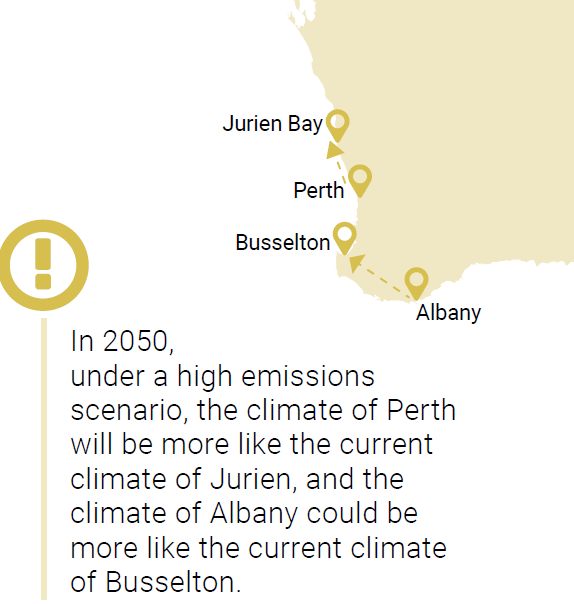
Global warming is likely to intensify, accelerate or enhance the global hydrological cycle. Forecasts predict that extreme weather events such as heavy rain and drought will increase in the future; dry regions will become increasingly dry, and the wet areas will become even more humid (IPCC, 2013).
Predicted changes
The Western Australian Climate Projections Summary (DWER, 2021) notes that in the south west of Western Australia:
- the temperature and frequency of very hot days is expected to increase, and heatwaves will get longer and more intense.
- annual, winter and spring rainfall will decrease. By 2030, winter rainfall is projected to decrease by up to 15 per cent, and by 2090 (under the high emissions scenario), rainfall is projected to decrease by up to 45 per cent, with every year’s winter rainfall projected to be lower than the current average.
- the time spent in drought is projected to increase and even though the total annual rainfall is expected to reduce, the intensity of heavy rainfall events will likely increase.
- drier and hotter conditions will lead to decreases in soil moisture and runoff because of increased water loss from plants and soils (evapotranspiration).
- harsher fire weather conditions will prevail in the future
- sea levels will continue to rise and the oceans will become more acidic
Impacts of these changes
The impacts of these changes on our water resources and communities will be significant. The changes in hydrological patterns will affect the health of all natural ecosystems and the community as well as most agricultural and economic activities.
Reduced groundwater recharge and stream flows are likely lead to insufficient water being available to meet environmental and/or community demands, and changes in rainfall patterns may put pressure on the capacity of existing drainage infrastructure and may lead to flooding.
Increased temperatures will increase evaporation from waterbodies, and evapotranspiration from plants. In addition, increased temperatures within waterways and wetlands, may increase algal growth and heat stress, leading to the death of aquatic organisms.
Within our communities, higher temperatures will exacerbate the urban heat island effect leading to increased water use by the community, and can affect the quality and availability of water supply.