What does this look like?
Water sensitive urban development is where water management is fully integrated into the urban form, built form and landscape.
- Public open spaces are multifunctional and include vegetation to treat small rainfall events and provide flood protection for major rainfall events.
- Stormwater is managed in streets (tree pits and raingardens) prior to discharge to the environment, managing quality and flows.
- Rainwater is harvested from roofs and used in toilets.
- Landscapes are watered efficiently with non-potable water (mostly groundwater).
- Wastewater is treated and reused appropriately.
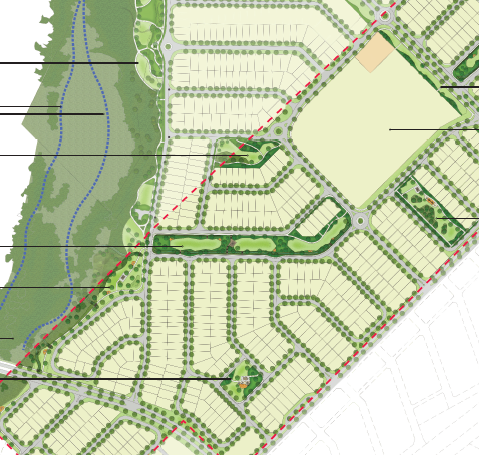
Water sensitive parks provide sport, recreation and nature functions while incorporating water management. Generally, small events should be accommodated in vegetated areas, with minor and major events flowing into grassed areas.
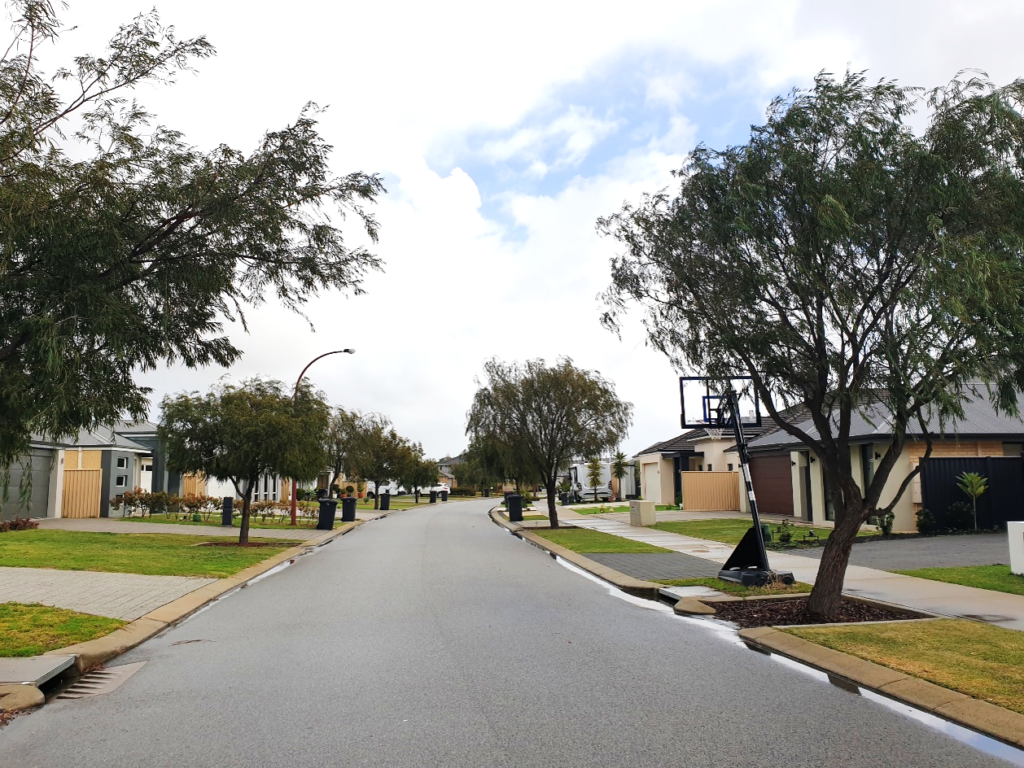
Water sensitive streets provide green linkages for people, to provide amenity and cooling and support walking and cycling, as well as plants and animals, supporting conservation of biodiversity. Generally, small rainfall event runoff is treated in vegetated areas (raingardens, tree pits, swales), the minor stormwater event is conveyed through vegetated areas (median or roadside swales) and the major stormwater event freely passes along roadway gutters.
Passive watering of street trees and vegetation is critical for the long term health of our streetscape. Stormwater can be let into these spaces through the design of road camber and sags, flush and broken kerbing, simple inlets/outlets and permeable paving.
Water sensitive built form should incorporate rainwater capture, storage and use; water efficient fixtures, fittings; access to quality outdoor private and communal spaces; and improved dwelling amenity and function.
The range of WSUD solutions is substantial and there is an option for every site and context. The following water management solutions should be included where they are appropriate to the site conditions and context, and assist in the achievement of better outcomes for the community and environment. Click on the hyper link for more information about each type of solution.
- Stormwater and groundwater management
- Biofilters
- Tree pits
- Vegetated swales
- Surface detention, retention and infiltration basins
- Buffer/filter strips
- Sediment basins
- Living stream
- Subsurface retention and/or detention systems
- Permeable pavement
- Gross pollutant traps
- Hydrocarbon traps or separators
- Water supply
- Rainwater capture
- Scheme water
- Groundwater
- Stormwater harvesting
- Treated wastewater
- Managed aquifer recharge
- Water conservation
- Fixtures and fittings
- Education
- Waterwise approach to landscape design and WSUD
Key messages
- A focus on “check box” requirements often leads to sub-optimal outcomes - deliver outcomes rather than criteria.
- Natural systems provide greater benefits than engineered ones – keep landform, trees, waterways and wetlands.
- Design criteria are just guidance – do what you can on the basis of a risk management approach.
- Don’t create something that can’t be easily maintained.
- Plant waterwise vegetation supported by a sustainable source of water for irrigation.
- Better water management allows us to:
- Address climate change risks and adapt to the impacts of climate change
- Improve the efficiency of service delivery and support other commercial benefits
- Support the creation of better places for people, plants and animals
Lots of guidance is available. See our list of resources on the New WAter Ways website.